Go to the homepage
4
Hike
17 km
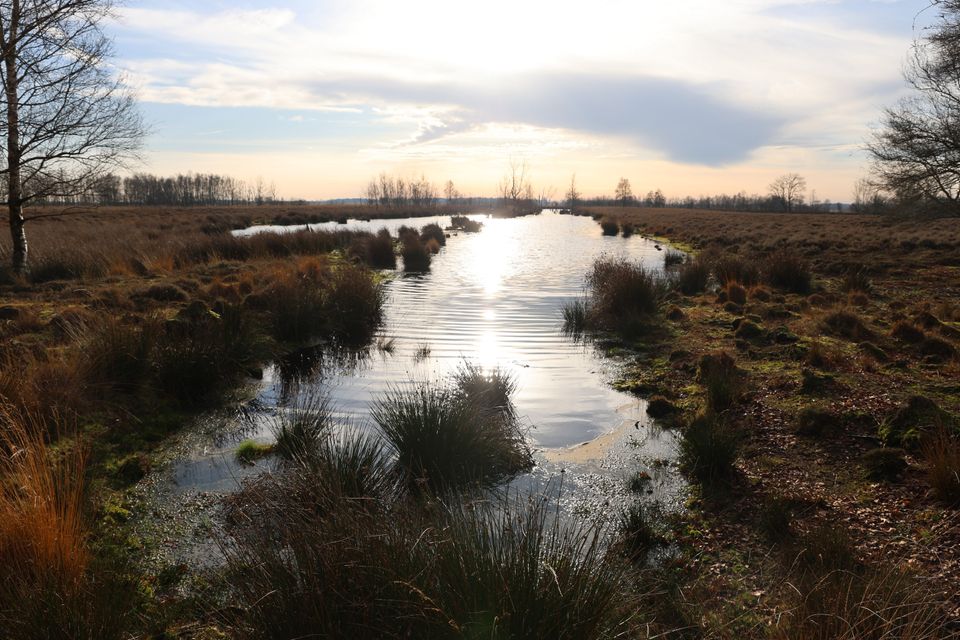
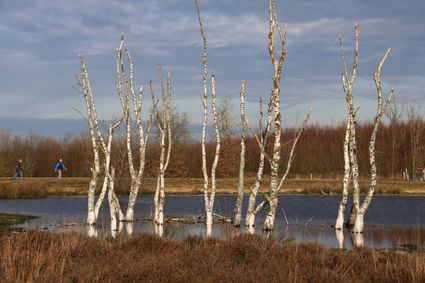
The third stage of the Moor|Veenland Trail starts in Weiteveen, on the edge of the untamed Bargerveen. Here you’ll walk amongst dark peat ponds, cotton grass, heather and birch trees through a landscape that shows what the border region once looked like. Along the way, you’ll pass traces left by peat cutters, poachers and small farmers. Here, civilisation feels a world away for a moment.
From junction 49 (the final junction of the route in the Netherlands), follow the signposts to 23 (towards Twist). You’ll arrive at the Marktplatz, which marks the end of this stage.
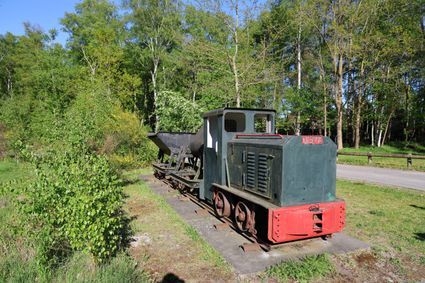
On the outskirts of Weiteveen, the narrow-gauge locomotive Diema, along with a few narrow-gauge wagons, is permanently parked in the grass. The old tracks have been cleared away. Just under four hundred metres to the north ran ‘De Linie’, a field railway line laid shortly after the Second World War.
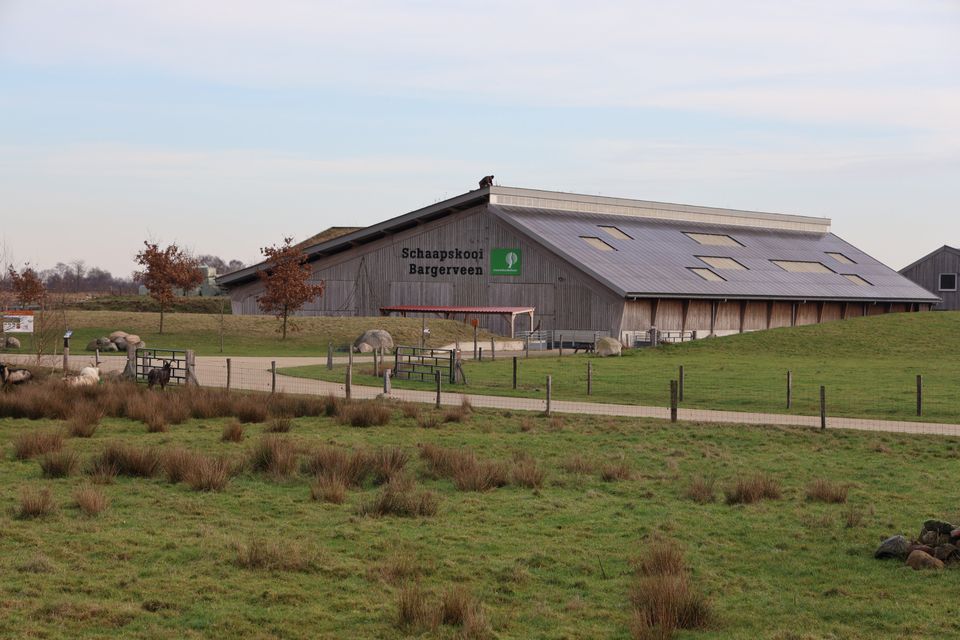
A great deal of work has been carried out in recent years to restore the Bargerveen to its former glory and to halt the ongoing drying out of the raised bog. An important element in this nature restoration is grazing by flocks of sheep.
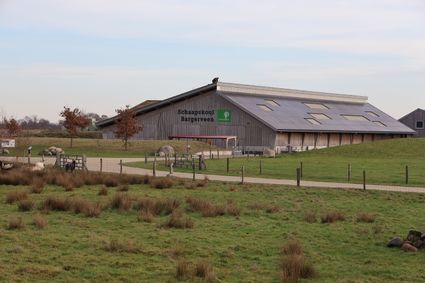
The natural riches of the Amsterdamsche Veld, which forms part of the Bargerveen, can only be described in superlatives. In one of the largest remaining areas of raised bog in the Netherlands, more than three hundred species of birds have been recorded.
Scattered amongst the remnants of the raised bogs lie the former settlements. Between 1910 and 1958, dozens of families lived in humble dwellings on the peat bog. They often kept a few sheep and goats and grew buckwheat on the bog.
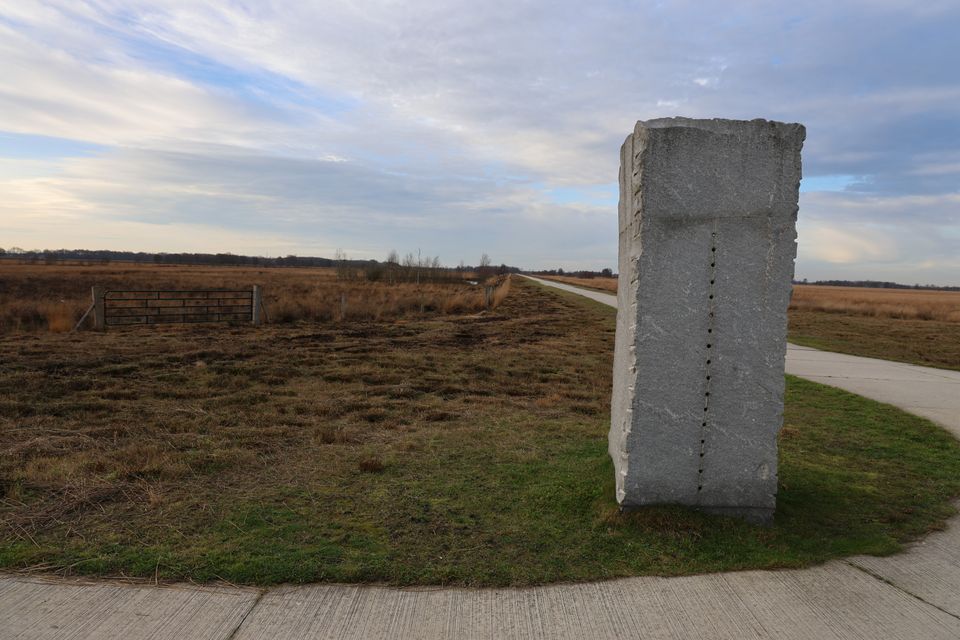
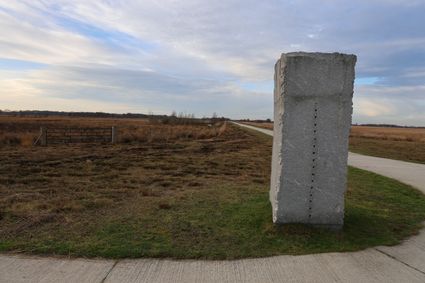
The ‘Stele’ artwork by the German artist Ulrich Rückriem marks the end of peat extraction in 1992. Norit ceased peat extraction in that year and, to mark the transfer of the raised bog to Staatsbosbeheer, purchased the granite artwork.
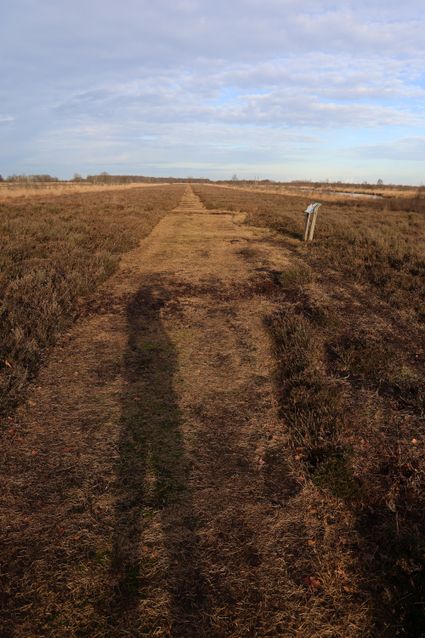
The Meerstalblok is a living raised bog where sphagnum moss continues to contribute to the growth of peat. The footpath runs along the embankment of the ‘Linie’ – the old narrow-gauge railway line from Erica to Schöninghsdorf – winding its way between the peat lakes.
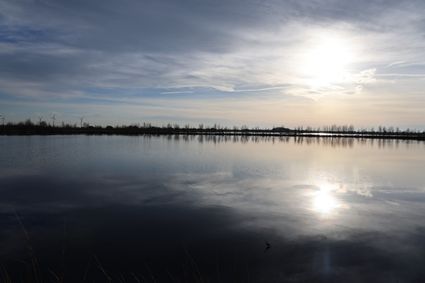
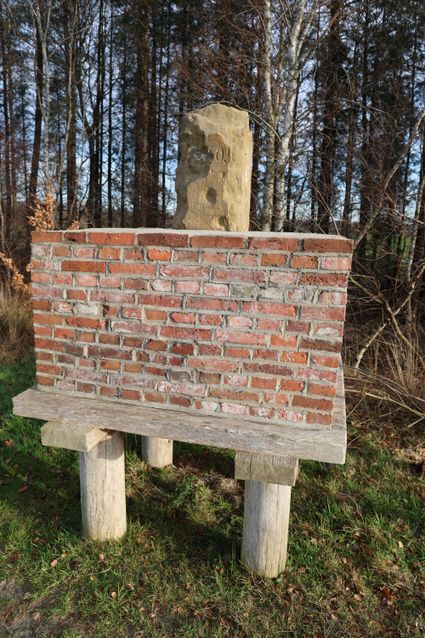
In an attempt to put an end to the smuggling of goods, the Dutch and Prussian governments agreed in 1901 to mark the border through the Bourtangermoeras more clearly. It proved not so easy to drive the posts into the marshy peat.