Go to the homepage
4
Hike
22.1 km
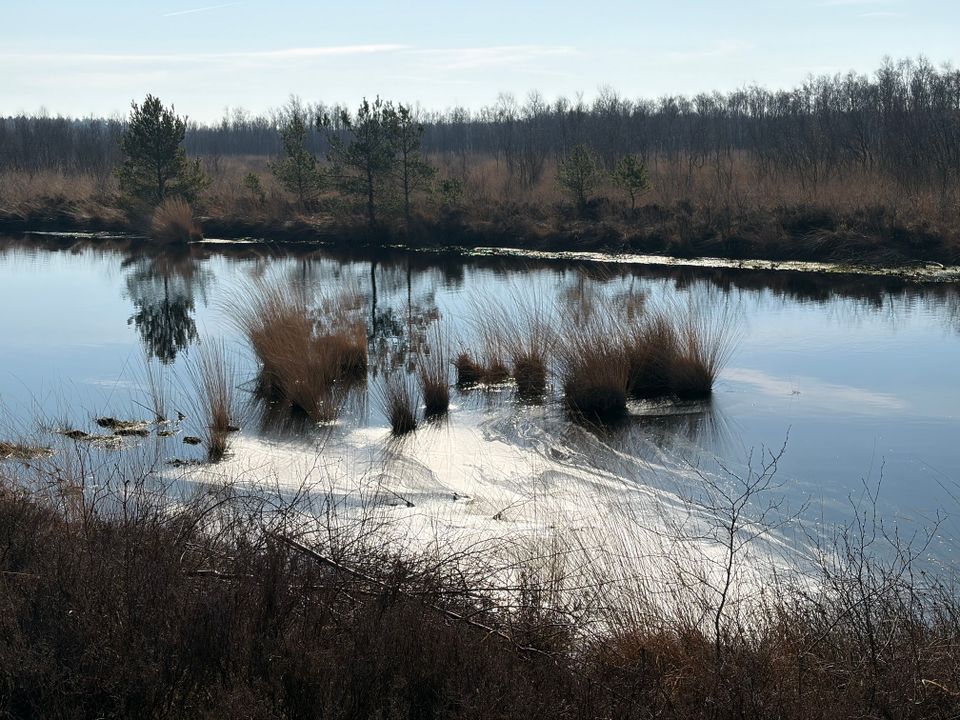
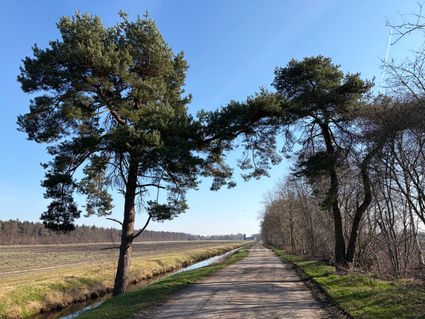
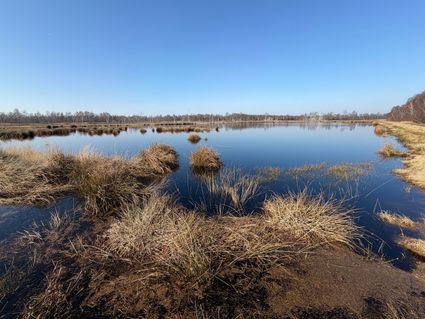
The fifth stage of the Moor|Veenland Trail starts in Zwartemeer and takes you across the border into the German peatlands. In the Provinzialmoor and Wesuweer Moor, peat extraction and nature restoration go hand in hand. The raised bogs are slowly returning, and you’ll walk past heathland, pools of water and vast peat meadows – the habitat of curlews, roe deer and even wolves.
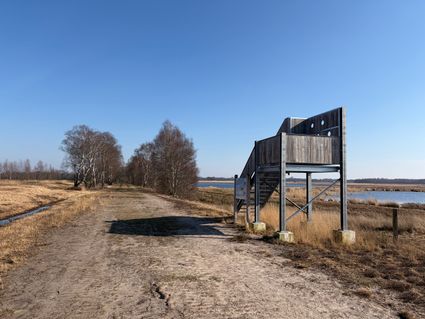
From behind the bird-watching screen, the birds in the northern lake area of the Bargerveen can be observed clearly. Meanwhile, the piercing call of the cuckoo rings out; you rarely hear so many cuckoos together. They answer one another in rapid succession.
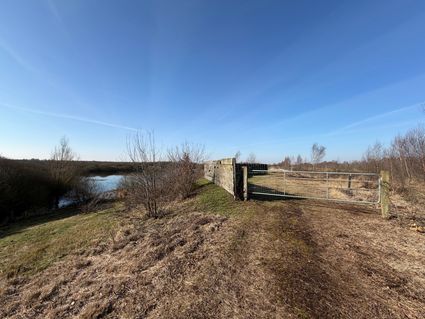
On the German side of the Bourtanger Marsh, peat extraction began relatively late. It was only after the Süd-Nord Canal was completed in 1901 and the connection to the Extended Hoogeveen Canal on the Dutch side had been finished in 1898 that commercial high-moor peat extraction could begin.
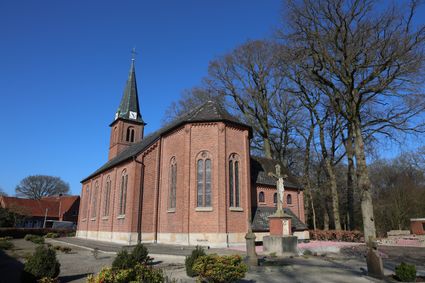
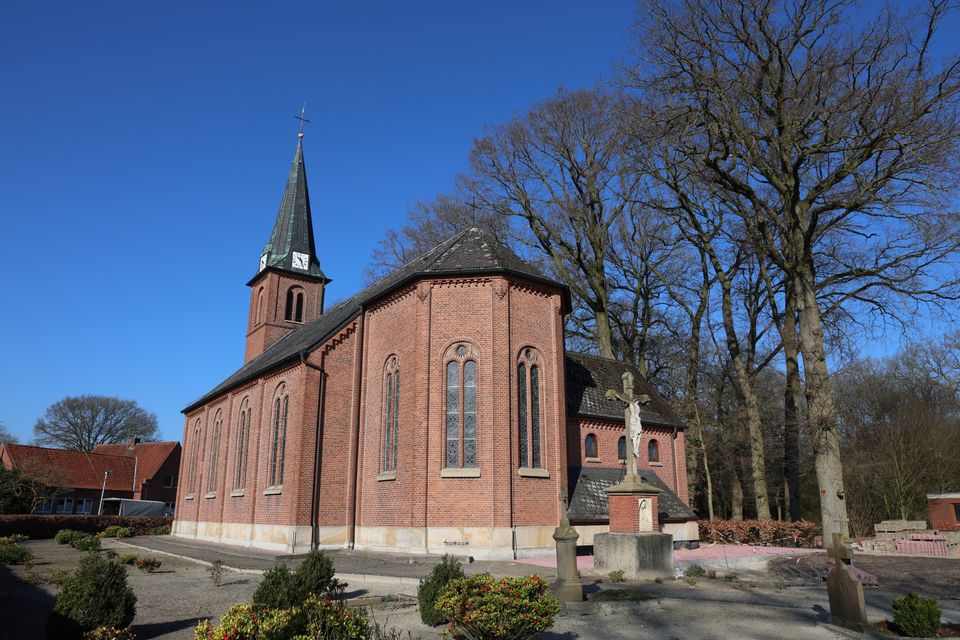
Like so many peat-mining settlements on the German side of the border, Schöninghsdorf initially had a temporary church. After 25 years, work began on the construction of St Francis’ Church, which was built right next to the South-North Canal.
Between late September and late March, many Bewick’s swans bob on the peatland pools in the Wesuweer Moor, sleeping on the water. When they wake up, they signal their departure from the water to the surrounding farmlands and peat meadows by nodding their heads.
The regeneration of the raised bog landscape would be unthinkable without the use of flocks of sheep and goats. They graze on the young shoots of trees, ensuring that the heathland and the remnants of the raised bog remain open.
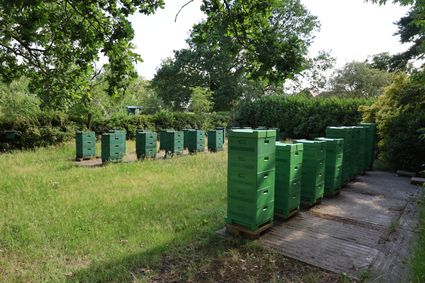
The exhibition at the German-Dutch Wesuweer Moor Bee Centre offers an insight into the life of the honeybee. Visitors can experience the structure of the beehive for themselves.
The Catholic church in Hebelermeer, dedicated to St Vincent de Paul, was built in 1865, almost a hundred years after the settlement was founded on the high moor. The fact that it took so long for a church to be built suggests that the villagers were far from well-off.