 Go to the homepage
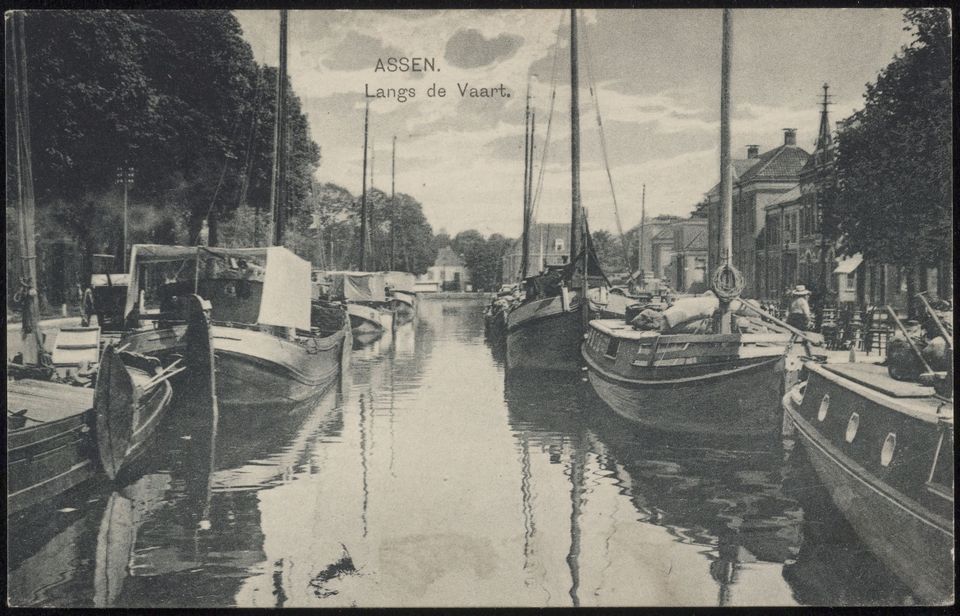
You are standing at the Kop van de Vaart, the point where the Vaart canal, dug in 1780, comes to an end. This canal changed everything.
Before then, Assen was a fairly isolated monastery settlement. But with the arrival of the canal, the town suddenly gained a direct connection to the outside world. Boats could come and go, and Assen developed into a thriving port town.
A town on the move
A lively area soon developed along the canal. New buildings began to appear, including:
Elegant townhouses
Warehouses filled with goods
Inns and cafés
And later even military barracks (1895)
The town came to life, and the waterfront became increasingly busy.
Take a look around
As you walk along the right-hand side of the canal, you will see DNK – De Nieuwe Kolk on your ri…
You are standing at the Kop van de Vaart, the point where the Vaart canal, dug in 1780, comes to an end. This canal changed everything.
Before then, Assen was a fairly isolated monastery settlement. But with the arrival of the canal, the town suddenly gained a direct connection to the outside world. Boats could come and go, and Assen developed into a thriving port town.
A town on the move
A lively area soon developed along the canal. New buildings began to appear, including:
Elegant townhouses
Warehouses filled with goods
Inns and cafés
And later even military barracks (1895)
The town came to life, and the waterfront became increasingly busy.
Take a look around
As you walk along the right-hand side of the canal, you will see DNK – De Nieuwe Kolk on your right. Today, it is a cultural centre where you can enjoy films, theatre performances and books.
But take a closer look at the buildings lining the water. Many of these grand historic buildings are still original and feature a variety of architectural styles. They tell the story of a time when trade and transport by water played a central role in everyday life.
As you stroll along the canal, you are walking through the very place where Assen opened up to the wider world – and where the town truly came to life.