 Go to the homepage
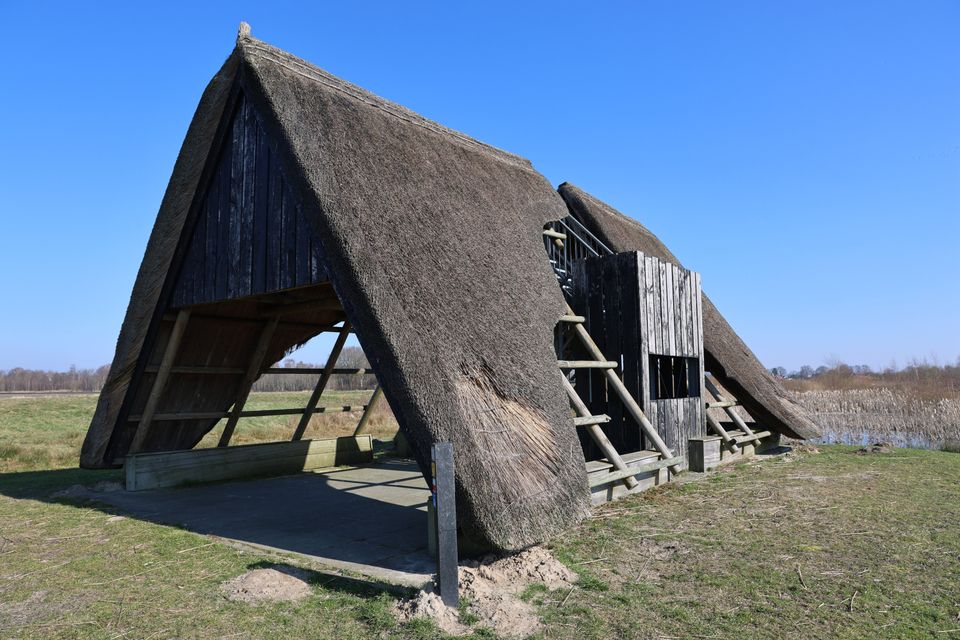
On the edge of the Zwarte Meer, a vast peat lake that was up to five metres deep, huts for peat workers and small farms where buckwheat was gr…
On the edge of the Zwarte Meer, a vast peat lake that was up to five metres deep, huts for peat workers and small farms where buckwheat was grown on the peat began to spring up after 1860. In the nineteenth century, the lake was so large that the thousands of birds that gathered there kept the local residents awake with their chirping and cackling. After the Hoogeveense Vaart canal was extended to the German border, the lake drained away. Since then, a new peat lake has been created as part of the redevelopment of the Bargermeer. On the shore stands a replica of the farmhouse built in 1882 by a parish priest. He had purchased the peat farm, comprising 10 hectares of land, as an investment. He named the farm Modo Udem Modo Sudem, Latin for ‘sometimes dry, sometimes wet’. On the roof is a viewing point overlooking the new nature reserve of Buffer Noord. The footpath leads over boulders in the upper reaches of the former Runde to the reed beds.