 Go to the homepage
Go to the homepage
Go to the homepage
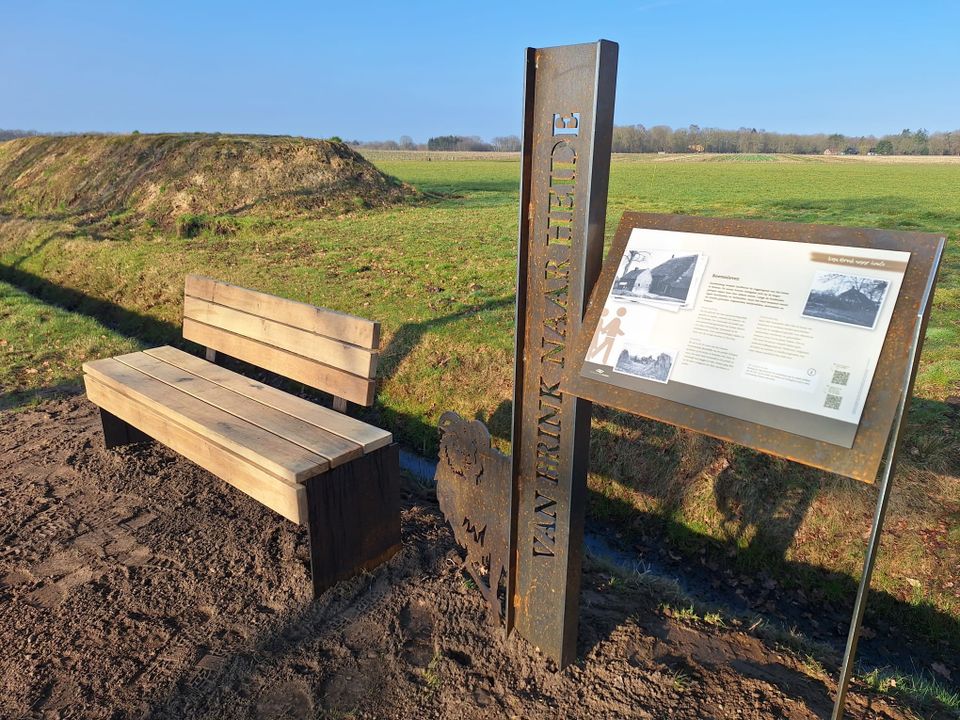
For centuries, agriculture formed the backbone of life in Ruinen. The first farmers settled on the higher essen, where their arable fields were located. Meadows and hayfields lay along the stream valleys, but most of the land consisted of rugged, uncultivated terrain: vast heathlands, marshes and woodland.
Collaboration
The system of the boermarke was developed to regulate the use of these shared land. A boermarke, or marke, was a cooperative association of farmers within a village or hamlet, dating back to the Middle Ages. These systems formed the basis of the village’s social organisation.
Deep litter barns
Well into the 19th century, farming in Dren…
For centuries, agriculture formed the backbone of life in Ruinen. The first farmers settled on the higher essen, where their arable fields were located. Meadows and hayfields lay along the stream valleys, but most of the land consisted of rugged, uncultivated terrain: vast heathlands, marshes and woodland.
Collaboration
The system of the boermarke was developed to regulate the use of these shared land. A boermarke, or marke, was a cooperative association of farmers within a village or hamlet, dating back to the Middle Ages. These systems formed the basis of the village’s social organisation.
Deep litter barns
Well into the 19th century, farming in Drenthe depended on the deep litter barn, or potstal in Dutch. Sheep grazed on the heath and provided wool, meat and manure. The manure was collected in deep litter barns, where it was mixed with sods and straw. This mixture was used to fertilise the poor sandy soils.
Modernisation
Around 1900, everything changed. With the introduction of artificial fertiliser and modern farming techniques, even sandy soils became suitable for arable farming. Heathlands disappeared and were replaced by grain fields. This process accelerated between 1930 and 1950, driven by large public labour provision projects. Unemployed labourers reclaimed the heath and turned it into farmland. Later, machines took over the work.
Tip: step back in time
Today the landscape still recalls this past in a few places. For centuries, sheep grazed the heath near Kraloo and Dwingeloo.