 Go to the homepage
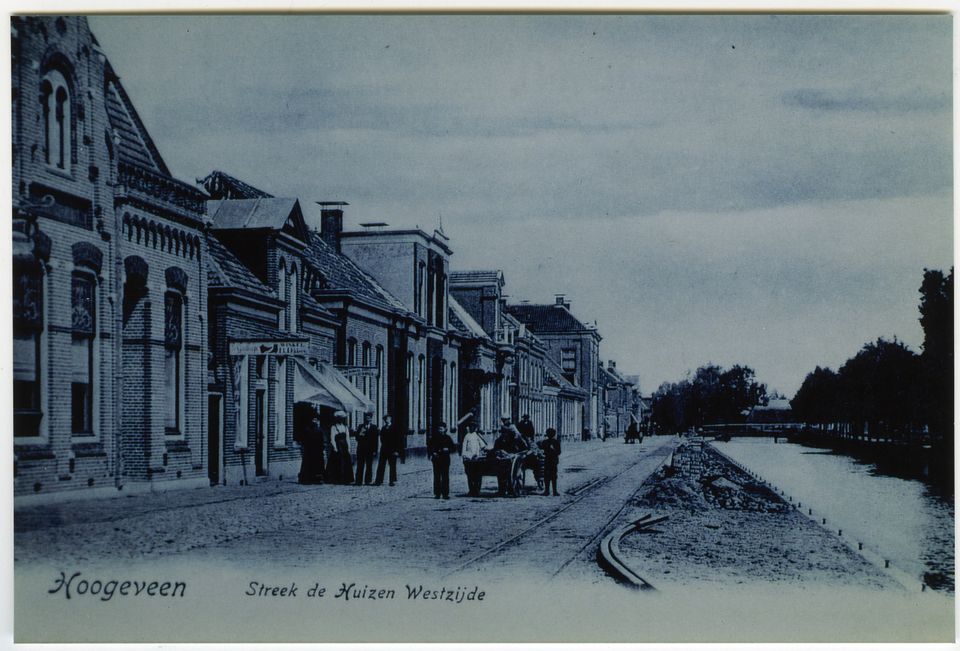
This building shows just how proud Hoogeveen was of its own savings bank around 1900. That year, the board of the Spaarbank Hoogeveen (Hoogeveen Savings Bank) commissioned the construction of this building. It was designed by municipal architect J. Carmiggelt.
Take a closer look at the front façade. At the top, the word SPAARBANK (Savings Bank) is carved in large letters into the stone. The elegant lettering is typical of Art Nouveau, known in the Netherlands as Jugendstil. This artistic and architectural style emerged around the beginning of the 20th century and is recognised by its flowing lines and decorative shapes, often inspired by plants and nature.
The letters are carved into Belgian bluestone, a blue-grey natural stone …
This building shows just how proud Hoogeveen was of its own savings bank around 1900. That year, the board of the Spaarbank Hoogeveen (Hoogeveen Savings Bank) commissioned the construction of this building. It was designed by municipal architect J. Carmiggelt.
Take a closer look at the front façade. At the top, the word SPAARBANK (Savings Bank) is carved in large letters into the stone. The elegant lettering is typical of Art Nouveau, known in the Netherlands as Jugendstil. This artistic and architectural style emerged around the beginning of the 20th century and is recognised by its flowing lines and decorative shapes, often inspired by plants and nature.
The letters are carved into Belgian bluestone, a blue-grey natural stone commonly used for decorative architectural details. The ornamental design in the gable – the curved section at the top of the façade – also clearly shows the influence of Art Nouveau.
Saving for the future
Towards the end of the 19th century, savings banks became increasingly important. Ordinary people could put money aside for the future, providing greater financial security at a time when social welfare systems as we know them today did not yet exist.
Hoogeveen's savings bank wanted not only to manage people's money, but also to give something back to the community.
A forest as a gift
A remarkable example of this can be found just north of Hoogeveen. Here lies the Spaarbankbos, a woodland nature area covering approximately 80 hectares.
The forest was once donated to the people of Hoogeveen by the savings bank. It became a place where residents could walk, relax and enjoy nature.
A wonderful idea, really: saving money for the future while also investing in a place that everyone can enjoy.