 Go to the homepage
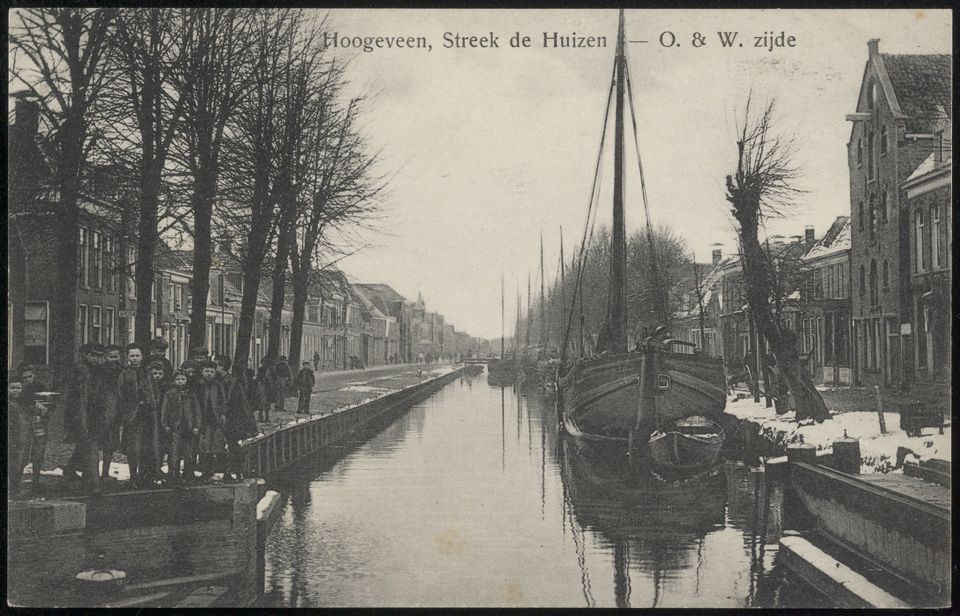
You are standing in a place with a long and lively history. This square is known as Het Kruis (The Crossroads). For centuries, roads, bridges and people have come together here.
Once, this was a busy hub of waterways and trade. There were no fewer than six bridges here, including two tram bridges. Boats, carts, trams and pedestrians crossed paths throughout the day.
The famous Egg Market
For many years, this place was known as the Egg Market. Every week, hundreds of farmers and their wives travelled to Hoogeveen from the surrounding countryside to sell their eggs.
The square would be filled with baskets and crates. Traders bought the eggs and sold them on to other buyers. This thriving trade helped Hoogeveen become a true egg-trading town.
Pullendag
Milk also play…
You are standing in a place with a long and lively history. This square is known as Het Kruis (The Crossroads). For centuries, roads, bridges and people have come together here.
Once, this was a busy hub of waterways and trade. There were no fewer than six bridges here, including two tram bridges. Boats, carts, trams and pedestrians crossed paths throughout the day.
The famous Egg Market
For many years, this place was known as the Egg Market. Every week, hundreds of farmers and their wives travelled to Hoogeveen from the surrounding countryside to sell their eggs.
The square would be filled with baskets and crates. Traders bought the eggs and sold them on to other buyers. This thriving trade helped Hoogeveen become a true egg-trading town.
Pullendag
Milk also played an important role in everyday life. Farmers brought their milk into town. Payment was arranged in an unusual way: residents placed their money in empty milk churns, locally known as “pullen”.
On Thursdays, when the milk was delivered, these churns were collected. The day soon became known as Pullendag.
The tradition is still alive today. During the summer, the Pullendagen take place on Thursdays: lively market days filled with people, music and a cheerful atmosphere.
The Boatmen's Monument
At the beginning of Hoofdstraat stands the Boatmen's Monument (Schippersmonument). This statue commemorates the boatmen who once transported much of the region's goods. Their lives were tough, and their work was often dangerous.
Take a moment to walk around the base of the monument. You will find a four-line poem describing the life of a boatman.
Boatmen, cafés and historic houses
Close to the monument stands Schippershuus. This was once a boatmen's café, where many boatmen came to spend their hard-earned wages after a long journey.
On one of the corners of the crossroads, you will also find a remarkable old building: the house with the pigeonholes. Small openings in its façade once allowed pigeons to nest there – a detail that still offers a glimpse of Hoogeveen's past.
Look around today, and you might see little more than a busy crossroads. But imagine what it was once like: boats waiting by the bridges, traders at the market and farmers carrying baskets full of eggs. A place where the whole village came together.